
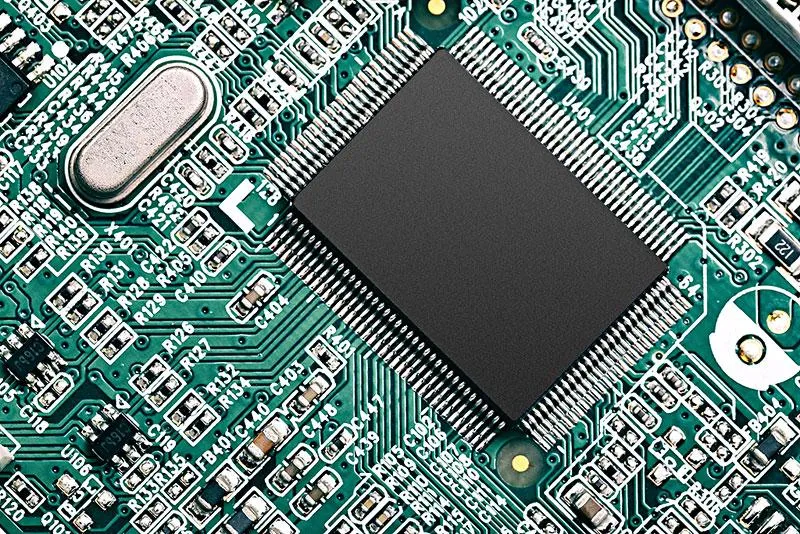
A tiny chip is called the “soul of technology”! In this modern society, various high technologies are almost all inseparable from a high-performance chip; it is the brain of a machine. It is also the foundation of a country’s scientific and technological strength.
Recently, Apple supplier Foxconn said that the global electronic components supply shortage crisis is worsening and is expected to last until 2022.
In fact, after the pandemic, a shortage wave appeared in the international chip market; not only the mobile phone industry, but the automotive industry was also affected; all industries that need chips were affected.
So here comes today’s question: why has a “shortage wave” of chips appeared globally? Chip supply is now so tight; what impact will this bring to the industry? Let us simply analyze it!
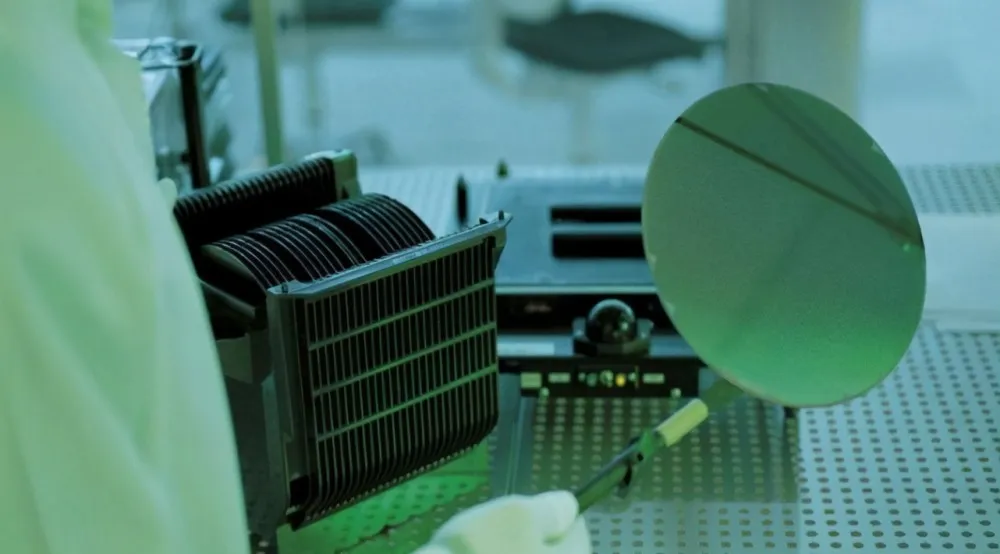
Why is there a global chip shortage?
The global chip shortage wave is mainly caused by the following 3 points, as follows:
First point: impact of the pandemic
In 2020, the global economy was affected by the “pandemic”. Many foundries and their upstream material suppliers had to stop work, causing delivery cycles to be extended.
Second, during the pandemic, working from home became popular globally, which led to increased demand for various electronic products.
Finally, many factories misjudged the impact of the pandemic on the economy, which directly led to the current passive situation.
Second point: man-made disaster
We can regard the pandemic as a “natural disaster”. Besides the pandemic, another one is the US suppression of Huawei; the US suppressing Huawei is actually suppressing our China’s science and technology.
Because the US controls the high-end semiconductor industry, once the US makes trouble, it disrupts the rhythm of the global semiconductor industry chain.
It is worth mentioning that, facing such a situation, Huawei had previously stockpiled a large number of chips on a large scale. It can also be said that the chips stockpiled by Huawei are enough for Huawei’s use for the next two years.
Third point: rapid development of 5G
2021 is the first year of 5G outbreak. As demand for 5G mobile phones increases, this also has an impact on chips.
Taking 5G mobile phones as an example, normally a 4G mobile phone needs only 1 PMIC, but a 5G mobile phone needs at least 3 to ensure operation; this means that with the emergence of 5G, chip capacity demand suddenly increased by 2 times.
Another point is that almost all chips for 5G mobile phones are 5nm chips, and as a relatively advanced process now, the 5nm process’s yield rate at foundries is far lower than that of 7nm.
The above 3 points are among the causes of the global chip shortage. According to Foxconn, the global chip shortage wave may last until 2022. Next, let us continue to see what impact the chip shortage will bring?
What are the impacts brought by the global chip shortage?
There is a good old Chinese saying: “Things are precious when they are rare”! At present, a shortage wave has appeared in chips globally, and many companies with money cannot buy chips in the market. Since chips cannot be bought, what impact will appear? Chun Gongzi believes the following points can be considered:
First point
The global chip shortage will continue for 2 years; during this period, electronic products will definitely rise in price, because consumers need to update electronic products, while chips are few, so manufacturers raising prices is inevitable.
Second point
Competition in the semiconductor industry is fierce and bleak; although everyone is currently in a crisis, it cannot be ruled out that capable companies can find opportunities in the crisis. After this wave of reshuffling in semiconductors, the industry may undergo some changes.
Third point
At present, the division of labor in the global chip industry chain is obvious: lithography machines come from Europe, semiconductor materials are provided by Japan, wafer foundries such as those in Taiwan are responsible for wafer manufacturing, and Germany completes wafer procurement and supplies them to automakers. No matter which link, it requires long technological accumulation and experience accumulation.
This wave of global chip shortage also gives us a warning: we must master high-end technology, or take in the entire industry chain, so that we will not be put in a passive position!
Having discussed some impacts brought by the global chip shortage, next let us continue to discuss why this wave of global chip shortage is a historic opportunity for China’s semiconductor industry? Everyone read on!
Does China’s semiconductor industry usher in a historic opportunity?
Data shows that in 2020 China’s chip imports climbed to nearly USD 380 billion (equivalent to over RMB 2.4 trillion), accounting for about 18% of total domestic imports.
In the past, things we lacked could be bought with money, but what if others no longer sell them to us in the future? Therefore, we must always keep core technologies in our own hands.
Take this global chip shortage wave as an example: although the global semiconductor industry has all been affected, companies like those in the US that control high-end semiconductor technology are the least affected.
Take the US-side company TSMC as an example: Huawei needs TSMC, Xiaomi, OV and others also need TSMC, and even Apple also relies on TSMC. TSMC has again expanded its own strength in this wave of chips!
Now we have also realized the importance of high-end technology. Data shows that in the past 2 years, 21,000 companies have expanded semiconductor business and increased investment in this field!
Conclusion: crisis, crisis, there is opportunity in crisis! Under the global chip shortage wave, this is also an excellent opportunity for our country’s chip industry to turn the situation around; we must seize the opportunity, actively promote the development of the domestic chip foundry industry, and seize breakthroughs in third-generation semiconductor technology to realize independent high-end technology as soon as possible! Everyone, is this not the case?